
Fabric Basics
Roman blinds work well with many fabrics, but some suit this style better than others. A good fabric should hang neatly in soft folds, stack tidily when raised, and give the level of light control you need. Medium weight materials usually work best, as they are stable yet flexible. Very thin fabrics may sag or show every cord and rod, while very heavy fabrics can feel bulky.
Consider the room’s use, the direction of light, and how often the blind will be operated. A practical choice balances look, privacy, durability, and easy care so your blinds stay smart and smooth for years. Think about cleaning too, as washable, hard-wearing fabrics make routine maintenance quicker and less stressful for busy households.
Cotton & Cotton Blends
Cotton is one of the most popular choices for roman blinds because it is breathable, versatile, and available in many colours, patterns, and textures. Pure cotton has a soft, natural look that suits both modern and traditional interiors, from relaxed kitchens to calm bedrooms and nurseries. It folds cleanly, which helps your blind look crisp and tidy when raised or lowered each day. However, cotton on its own can crease, shrink slightly after washing, and fade over time in very bright, sunny rooms. Lining will help reduce these issues, but many people now choose cotton blends instead.
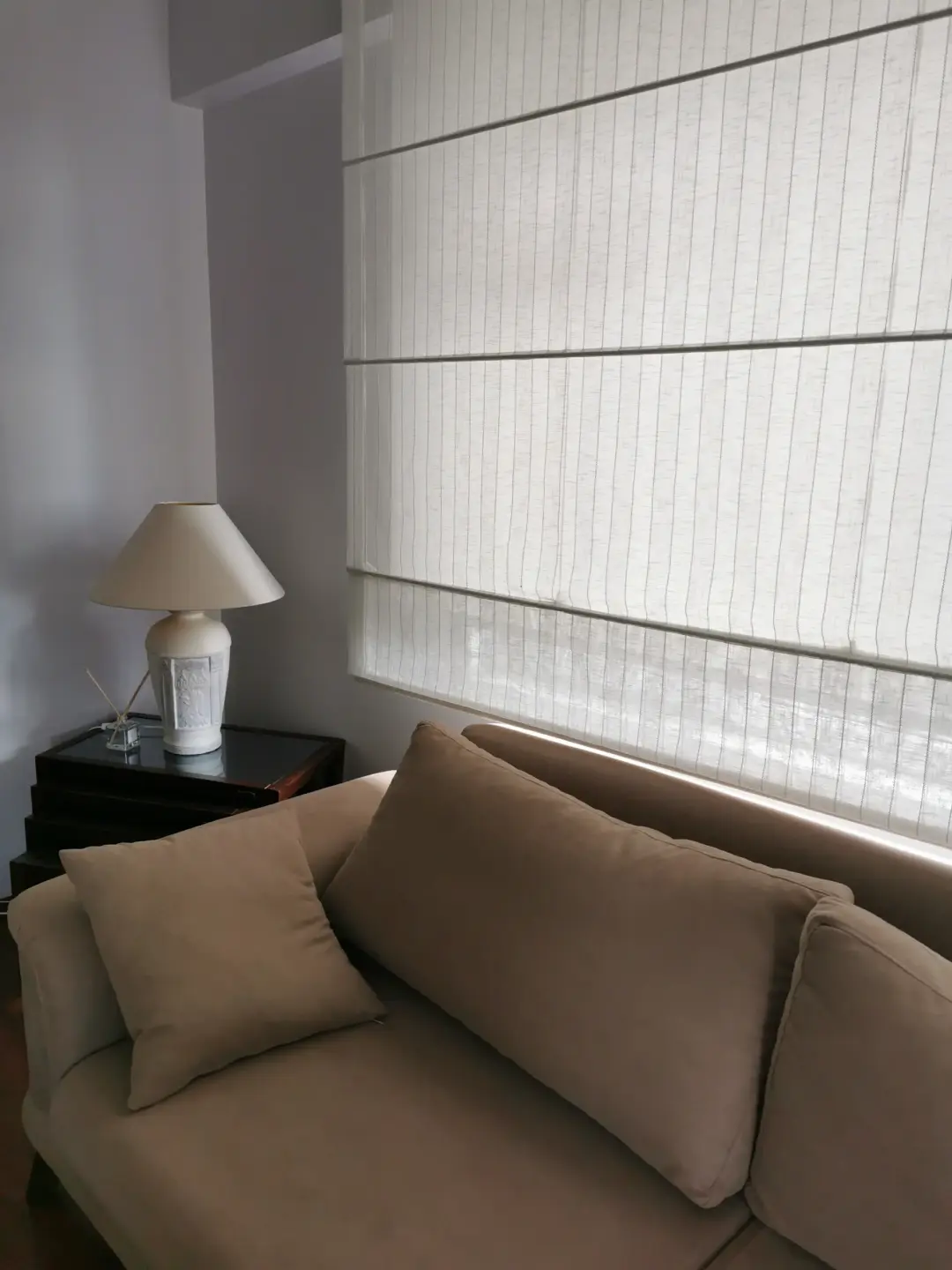
Blends usually mix cotton with polyester or linen to add strength, crease resistance, and better shape retention across the width and drop. They also tend to handle frequent use well, so they are a sensible option for family homes with busy windows and doors. If you like a natural feel yet want something practical, a mid weight cotton blend with a quality lining is often the best balance between comfort, durability, and value.
Many printed cottons also take colour very well, so they are perfect for florals, stripes, or playful children’s designs that need clear detail. If you are dressing a sunny kitchen or south facing room, pairing cotton or a cotton blend with a blackout or thermal lining can help protect the fabric and reduce glare. For very tall or wide windows, ask your supplier about the fabric’s stability so the blind keeps hanging straight over time, even with regular everyday use.
Linen & Linen Blends
Linen has a relaxed, elegant texture that many people love for roman blinds. Its slightly slubby weave catches the light and adds gentle character to plain schemes. Pure linen hangs beautifully but can crease and move with changes in temperature and humidity. Linen blends, often mixed with cotton or polyester, help reduce creasing and improve stability while keeping the natural look. These fabrics work especially well in living rooms, dining rooms, and bedrooms where a soft, airy feel is desired.
For humid spaces, choose a blend with more synthetic content and always add suitable lining for better control. For bathrooms and kitchens, choose linen look blends that mimic the texture while coping better with steam, splashes, and daily cleaning demands.
Polyester & Performance Blends
Polyester and performance blends are ideal when you need roman blinds that can cope with busy family life, strong sunlight, or trickier rooms. Polyester is durable, colour fast, and holds its shape well, so folds stay neat with little need for ironing or steaming between cleans. It also resists shrinking and stretching, which is useful for larger or wide span windows where stability really matters.
Modern performance fabrics often mix polyester with cotton or acrylic and may include stain resistant or moisture resistant finishes for added protection. These qualities make them well suited to children’s bedrooms, rental homes, and high traffic spaces where blinds are raised and lowered many times a day.
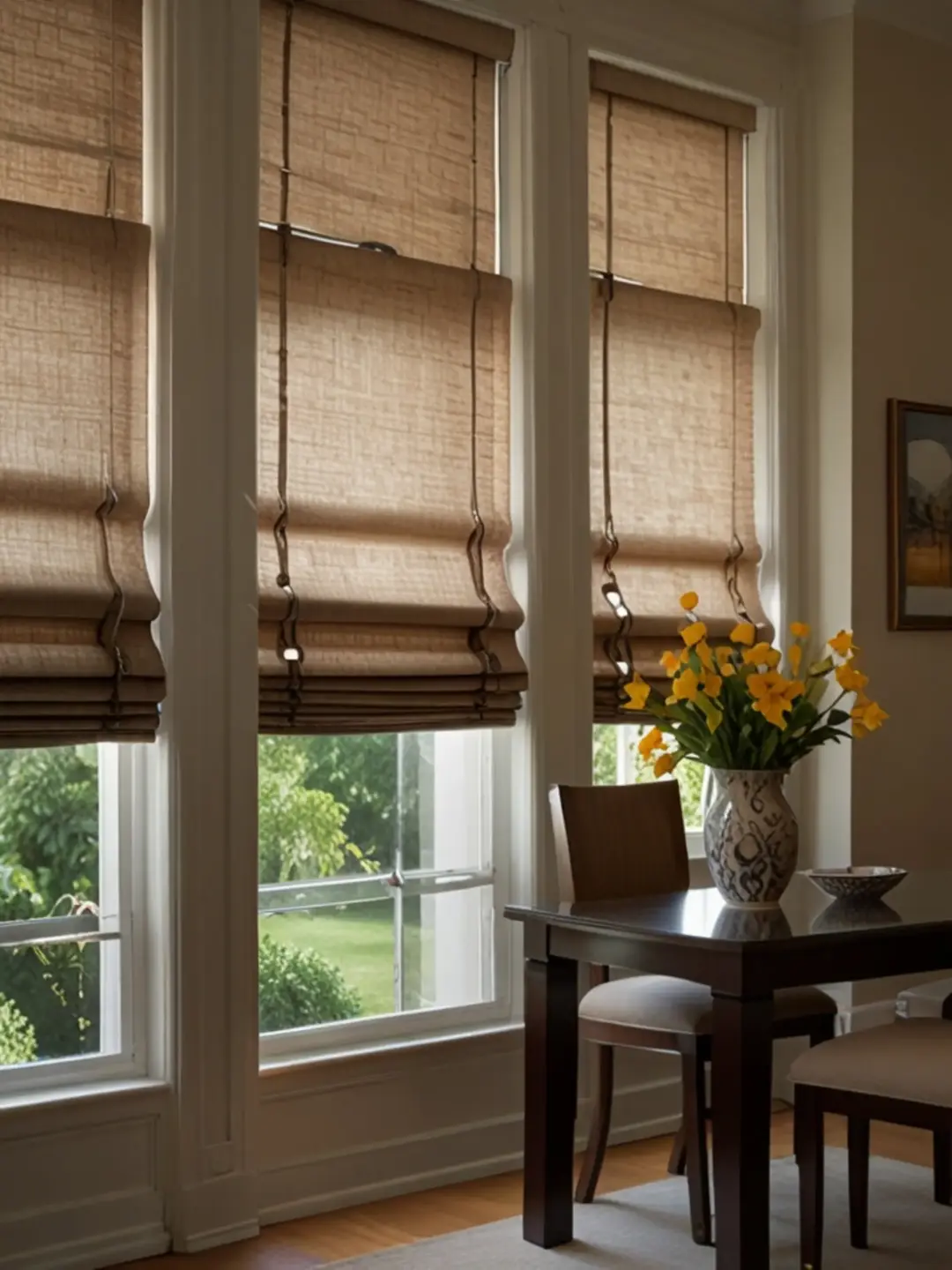
In very sunny rooms, a polyester rich fabric combined with blackout or thermal lining can help shield furnishings, cut glare on screens, and improve comfort throughout the year. Some specialist performance weaves also offer improved fire resistance or acoustic benefits, which can be important in certain commercial settings or flats near busy roads. For kitchens, bathrooms, and utility spaces, performance blends are often a safer choice than natural fabrics because they handle steam, splashes, and frequent wiping far better.
Many are machine washable or easy to sponge clean, which simplifies everyday maintenance. If you prefer a softer, less shiny appearance, look for textured or matt finish options that imitate cotton or linen while still providing the practical benefits of polyester and modern technical fibres. Always check care labels and fitting advice to match the fabric with each room.
Printed vs Woven Patterns
Pattern has a big effect on how your roman blinds look when raised and lowered. Printed fabrics have the design applied onto the surface, which allows very detailed artwork and a wide range of colours at a reasonable cost. Woven patterns, such as jacquards or stripes, are made as part of the fabric structure, giving more depth and often a more refined feel.
Large bold prints create a statement but may lose parts of the design in the folds, while small scale or all over patterns read more evenly. Always consider pattern repeat, window size, and how many blinds will be in the room. Think about how the pattern will align across blinds so the room looks balanced and calm.
At Phoenix Blinds, we help you choose the best fabrics for your roman blinds, from cotton and linen blends to hard wearing polyester and performance options. We offer expert advice on pattern choice, linings, and suitability for each room, so your made to measure blinds look stylish, hang neatly, and stay practical every day.
