Fabric Choices
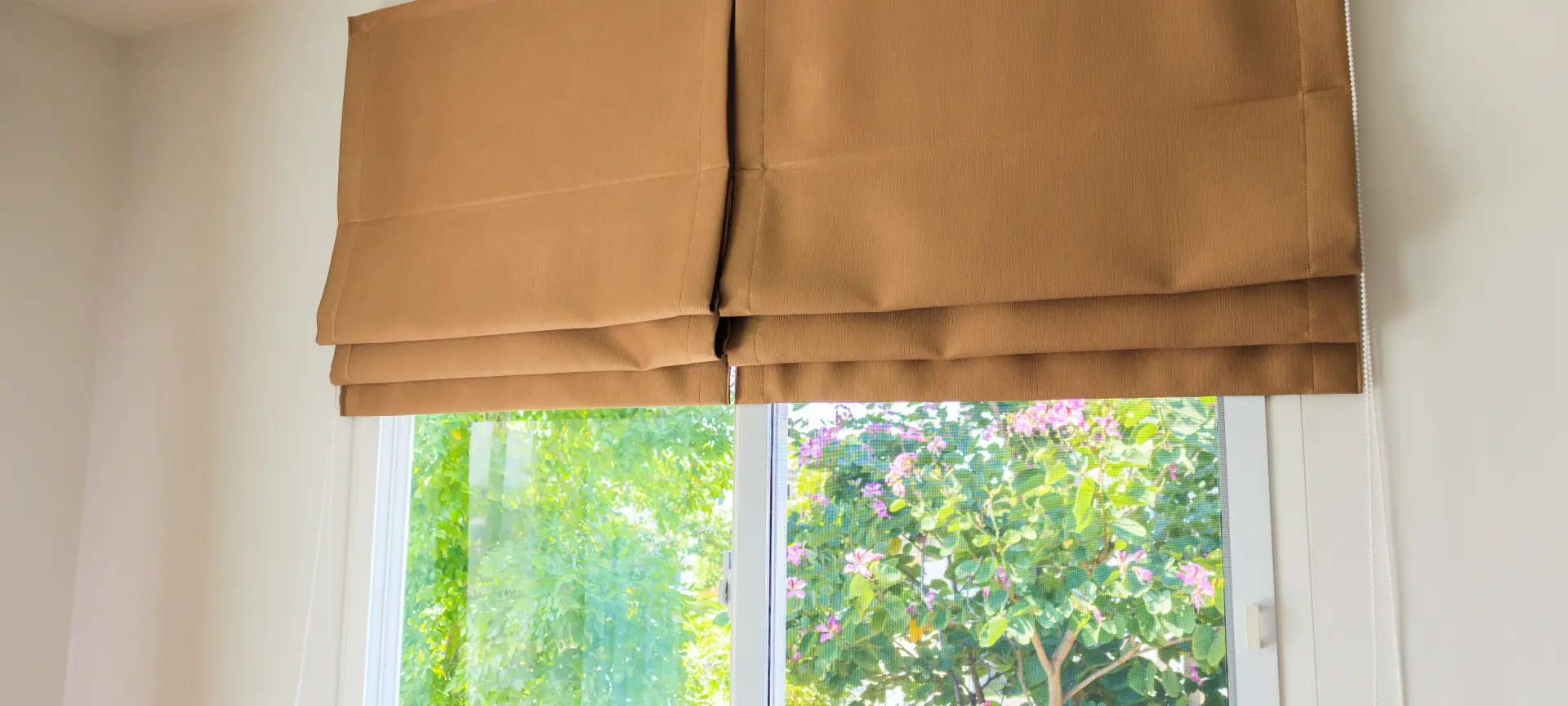
Roman blinds are a stylish choice for kitchens and bathrooms, but fabric matters. In busy, practical rooms it is smart to pick materials that are easy to live with. Cotton and linen blends give a soft, homely feel and hang neatly when the blind is raised. They work well in drier parts of the room, such as over a breakfast nook or above a dining area.
For zones close to the sink, hob or bath, consider moisture resistant fabrics that are less likely to stain or warp. Polyester and blended performance fabrics are simple to wipe clean and cope better with steam and splashes. Patterned designs can also help hide small marks, so your blinds look fresher and inviting longer.
Moisture, Heat & Humidity
Kitchens and bathrooms have high levels of moisture, heat and humidity, so roman blinds in these rooms must work a little harder. Steam from cooking or hot showers turns into condensation on cool surfaces and can settle on fabrics. If the material is not suitable, it may shrink, fade, sag or even develop mildew over time. Look for fabrics described as moisture resistant or suitable for humid rooms, as these are often synthetic or blended fibres that absorb less water.
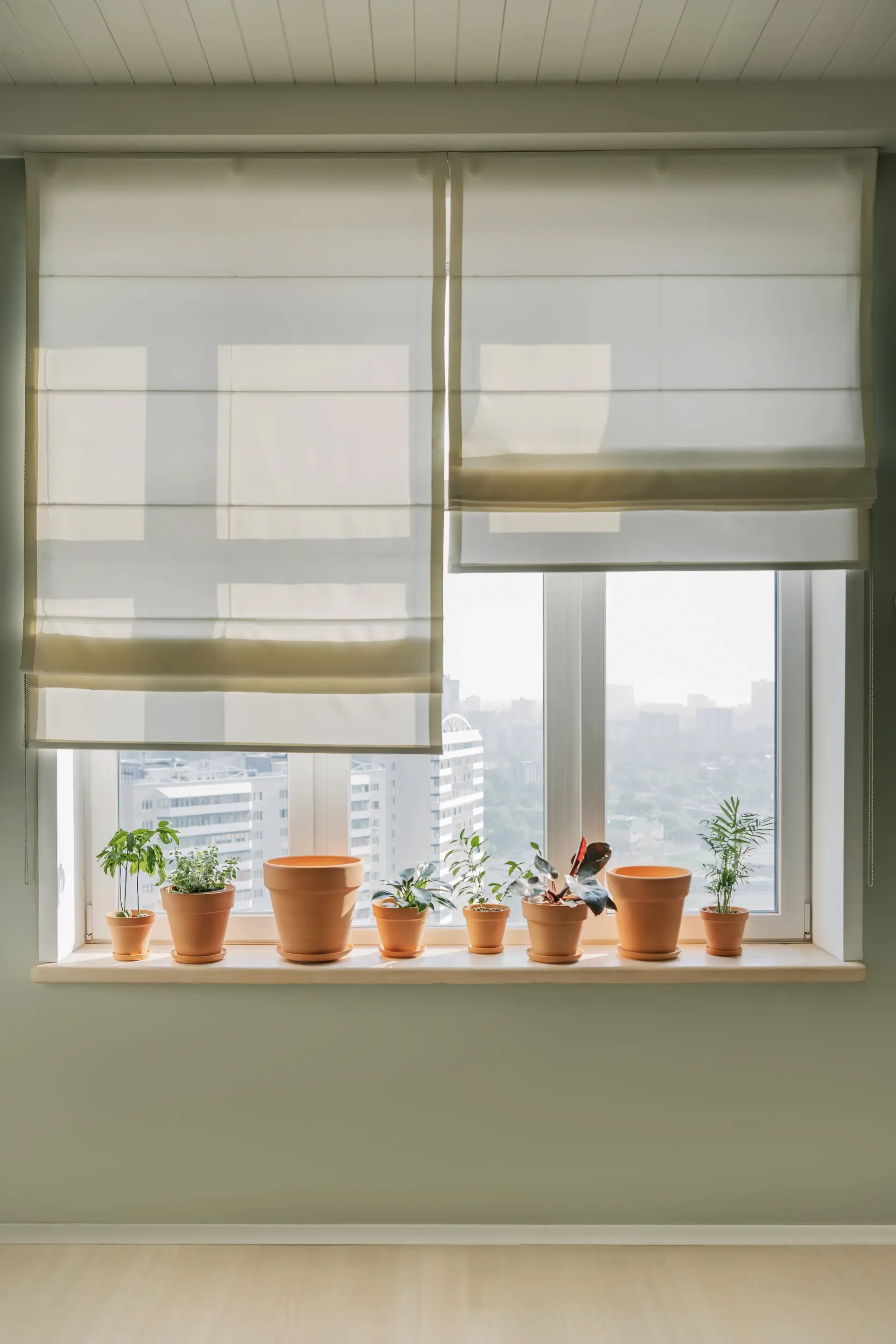
In kitchens, try not to position blinds too close to open flames, very hot pans or fridges that give out warmth. Grease and food splashes can mark fabric, so a wipe clean finish is very useful and saves time when cleaning. In bathrooms, think about how often the room is used and how quickly it dries out between showers or baths. A blind beside a frequently used shower will need tougher fabric and regular airing to stay fresh. To help your blinds last, keep a little space between the fabric and the glass so air can move freely and moisture can escape.
Using an extractor fan or opening a window while you cook or bathe will cut steam and protect both the blind and the window frame from long term damage. In very steamy rooms you might also consider pairing the blind with tiles or splashbacks around the wettest areas so that most moisture falls on easy to clean surfaces. This keeps fabrics looking brighter for a longer period overall.
Lining Options
The lining of a roman blind has a strong effect on how it performs in kitchens and bathrooms. Standard cotton lining gives the fabric a smoother finish and helps it hang evenly. It suits windows away from splashes where moisture levels are moderate. For brighter spaces, consider a blackout or dimout lining that reduces glare, offers privacy and protects colours from fading.
Thermal linings add a light insulating layer, which can help keep rooms warmer and reduce draughts around older windows. In humid areas, a lining made from polyester or another stable fibre is usually more reliable than cotton. Always check that the lining is securely attached and well stitched so it keeps its shape during daily use and cleaning.
Light Control & Privacy
Light control and privacy are vital in both kitchens and bathrooms, and roman blinds offer very useful flexibility. In a kitchen, you may want bright natural light through the day but less glare on worktops, dining areas and screens. A standard lined roman blind in a pale or mid tone fabric will soften strong sunlight while still keeping the room cheerful.
If your window is overlooked, choose a thicker fabric or a dimout lining so you can work comfortably without feeling on display. You can lower the blind to cover the window yet still enjoy a gentle glow that makes cooking and entertaining pleasant. Bathrooms often need stronger privacy, especially at night when internal lights make silhouettes easier to see from outside. Here, blackout or tightly woven fabrics are helpful, as they block clear outlines and make the room feel secure and calm.
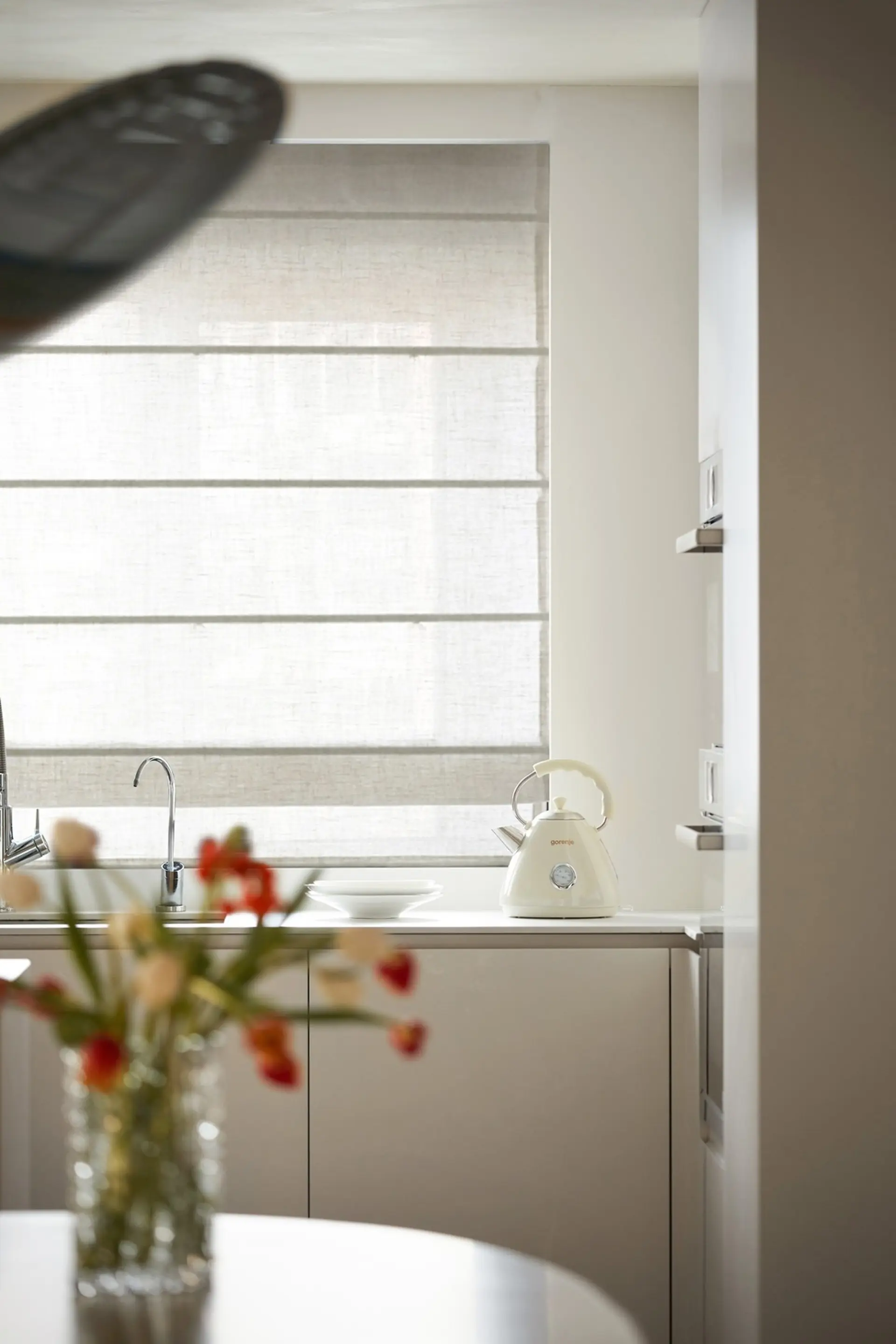
If you like daylight during the day, pair the blind with frosted glass or a sheer under blind for softer coverage that still protects modesty. Think carefully about how you use the space and who uses it. A busy family bathroom used for bathing, showering and getting ready will usually benefit from more privacy than a guest cloakroom or ensuite that sees lighter use.
Cord or chain operation lets you set the blind at any height, creating a balance of light, privacy and ease of use throughout the day. This flexible control is one reason many people choose roman blinds for these busy, hard working rooms daily.
Ventilation & Condensation
Good ventilation is vital when fitting roman blinds in kitchens and bathrooms. Without enough fresh air, steam from cooking, kettles and showers can sit on the window and on the fabric. Over time this extra moisture may lead to damp patches, mould growth and staining. Choose a blind design that still allows you to open the window fully so air can circulate. Mounting the blind slightly above the recess helps air to move and lets condensation run off the glass.
Use extractor fans whenever you cook or bathe, and leave the blind raised until heavier moisture has cleared. Regularly wiping the window frame and sill dry will help keep both the blind and the surrounding area clean, fresh and healthy.
We supply and fit made to measure roman blinds for kitchens and bathrooms, helping you choose suitable fabrics, linings and finishes for humid spaces. Our team offers guidance on light control, privacy, ventilation and condensation so your new blinds stay stylish, practical and long lasting in every busy, hard working room.